Philip Jr. was born about 1757. It is currently not known exactly whom his wife(s) are. It is thought that it was Catherine Dohoney or Mary Dingess or both. Catherine’s sister Mildred married brother Elijah Sr.
He enlisted in the Culpeper Minutemen Service under the command of Captain Spencer. The regiment he belonged to was led by Colonel George Taliaferro, Lieutenant Colonel Edward Stevens, and Major Thomas Marshall. They actively engaged the British forces in various battles, including the Skirmish at the Great Bridge on December 9, 1775, as well as at Portsmouth and during the siege of Norfolk. Due to illness, Philip was sent home by Captain Spencer in his own wagon.
After recovering, he voluntarily joined a company led by Captain John Scott from Orange County. They marched to the town of Yorktown, where he served as a member of the 2nd Virginia Infantry Regiment under the leadership of General Thomas Nelson. He remained with the regiment until the British forces retreated to Carolina, at which point he was granted a furlough to return home.
Subsequently, Philip enlisted alongside his brother William in the regiment commanded by Colonel Francis Taylor. Their primary duty was to guard the barracks in Charlottesville, Albemarle County, Virginia. Following the disbandment of the barracks, Philip accompanied the prisoners first to Winchester, Frederick County, Virginia, and later to Fredericktown, Maryland. Throughout the winter, he faithfully fulfilled his duty of guarding the prisoners. Eventually, he agreed to serve in Crockett’s Regiment in the company commanded by Captain Chapman. However, he fell ill once again and was unable to accompany the regiment to the West.
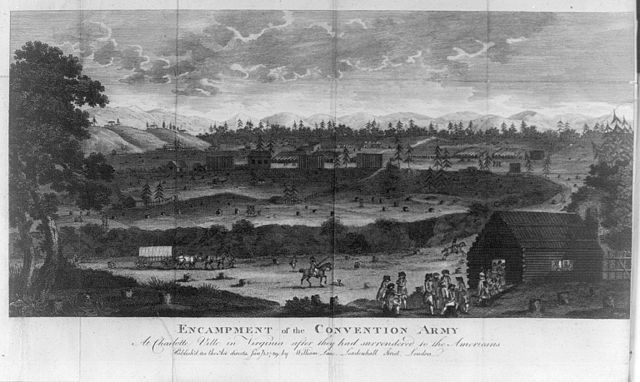
He once again regained his health while staying at his residence in Orange County. He joined the Orange County Militia, serving as a Volunteer under the command of Col. Thomas Barbour. Alongside his four brothers, he marched to Richmond and later to Williamsburg. His service came to an end in June 1781 when he was discharged at Page’s Mill in Orange County.
Philip Ballard Jr. pension application1 (transcribed from original document), his Revolutionary War service in his own words.
State of Virginia, County of Logan
On this 21st day of August 1832 Personally appeared before the Court of the County of Logan, Philip Ballard Senr a Citizen of this County and in the State of Virginia Aged 75 years on the 12th day of March last, who being duly Sworn according to Law; Doth on his Oath make the following declaration in order to obtain the benefit of the provisions made by the Act of Congress passed June the 7th 1832. That he enlisted in the Minute Service under Captain Spencer, the Regiment to which he was attached was commanded by Col. Taliaferro & Lieut. Col. Stevens & Major Thomas Marshall; was engaged against the British at the Skirmish at the Great bridge and also at Portsmouth; and about the time of the besieging of Norfolk; deponent was taken sick, & was sent home by Capt. Spencer in his own Wagon. After his recovery he Volunteered his Services to his Country; and Joined a Company Commanded by Captain Scott of Orange County: and marched to the town of little York, where he continued with the Army under Genl. Nelson till the British marched off to Carolina: when he was furloughed to return home. His Country still needing his Services, he enlisted with Capt. Burnley in the Regt. of Col. Francis Taylor who were guarding the Barracks in Albemarle County where he continued for some time at the breaking up of the barracks he accompanied the prisoners to Fredericktown in Maryland; at which place often guarding the prisoners all the winter; he agreed to serve in Crockett’s Regiment in the Company of Capt. Chapman or Chaplin but was again taken sick and did not accompany the Regiment to the West–.
He again recovered at home in Orange County & Joined the Militia under Col. Thomas Barbour as a volunteer with four brothers and was marched to Richmond: & subsequently to Williamsburg and was discharged at Page’s Mill in Orange County in June 1781.
He never received any pay for his Services except for the time he served in the minute service; nor has he received any pension, except a Warrant from the Executive of Virginia for 100 acres of land, which is now deposited in the General Land office of the U. S. to be exchanged for Scrip; agreeable to Law. Sworn to & Subscribed the day & year aforesaid S/ Philip Ballard
No pension was received from my Services whatsoever, so none to relinquish.
At Logan County Court August Term 1832
Philip Ballard Sen. this day made his declaration in order to obtain the benefit of a provision of the last Session of Congress providing for pensions of the soldiers the revolution and which was duly executed and Sworn to. And the said court do hereby declare their opinion that the above named applicant, was a revolutionary soldier and served as he states, which is ordered to be certified, agreeably to the Act of Congress.
Test: S/ Edwin Robertson, Clk. of said County Court
Thomas Ballard, his brother and Richard Brooks, a clergyman, gave the standard supporting affidavits.
Logan County to wit
This day Philip Ballard Jr. a Citizen of said County appeared before me the Subscriber, a Justice of the peace for the County aforesaid and after being duly Sworn according to Law, States, that he was well acquainted with Philip Ballard the Subscriber to the declaration hereunto annexed for 25 years, has heard his great Uncle mention on many occasions, his services in the War of our revolution; and it has never been doubted in the neighborhood that said Ballard who was over 75 years of age was a revolutionary Soldier in which opinion I freely concur for I have frequently heard him detail his services in the War, when he could have no hope of reward, I have also heard my uncles Thomas & Elijah Ballard, Speak of the services of Philip, who died on the 13th day of April last, & whose administrator is now applying for his pension do you did by Law in order to settle said Ballard’s debts – Given under my hand & seal this 15th day of August 1833. S/ Joseph Straton, JP
Philip Jr. was pensioned at the rate of $80 per annum commencing March 4th, 1831, for service as a private for two years in the Virginia service.
Three Court cases involving Philip Jr. in Orange Co., Virginia.2,3,4
He said what?!
On November 1797, during the proceedings at Orange County court, Joseph Chapman filed charges against Philip Ballard Jr. for the offense of “Trespass upon the Case, for Words.” To clarify, this charge refers to a non-violent attack on an individual through the use of spoken or written words. In modern terms, it is commonly known as slander.
Joseph Chapman accused Philip Jr. of publicly stating at some point that “Joseph Chapman was a Rogue, and had killed a Negro,” implying a felonious act committed in the presence of several esteemed individuals. As Joseph’s reputation and honor were significantly tarnished by these allegations, he sought restitution through legal means.
Upon evaluation of the case, Philip Jr. was found guilty of the aforementioned charge and was ordered by the court to pay a restitution amount of 500 Dollars to Joseph Chapman. Subsequently, Joseph’s attorney approached Philip Jr. to initiate the collection of the awarded payment. However, Philip took offense, becoming angered, and outright refused to comply with the court’s decision. In light of this development, Joseph Chapman and his attorney returned to the court to report the matter. Since Philip Jr. was absent from the proceedings, the judge ordered a continuance.
On March 1799, Philip Jr. was compelled to appear in court with his attorney, where he once again faced judgment and was found guilty. The jury, in this instance, awarded Joseph Chapman a sum of 100 Dollars. Consequently, a new trial was scheduled for May of 1799 at the District Court of Fredericksburg. However, Philip Jr. opted to appeal this decision to the District court on grounds that were deemed valid by the court, leading to the setting aside of the aforementioned verdict.
Ultimately, the Appellate Court in Richmond, on October 21, 1800, denied Philip’s appeal and upheld the previous ruling ordering him to pay the settlement amount as initially determined.
“Upon an appeal from a judgment recovered by the appellee against the appellant and Medley Ballard in the District Court held in Fredericksburg the twenty ninth day of September 1800 for three hundred and twenty dollars and seventy eight cents and costs, but to be discharged by the payment of one hundred and sixty dollars and thirty nine cents with interest thereon to be computed after the rate of six per centum per annum from the eleventh day of June 1800 till payment and the costs.”2
Shot in the back!
On the 25th of June, 1801, Philip Ballard Jr., May Burton, Thomas Collins, and Cornelius Wayland were returning from the Madison County court. As they approached their homes, Peyton Chapman swiftly rode past them and stopped on the road near May Burton’s residence. Several days prior, Peyton had asked Cornelius Wayland for a knife to sharpen a stick. When questioned by Cornelius about the purpose, Peyton responded, “There was an individual following him, whom he intended to confront with the sharpened stick.” Thomas Collins and the others encountered Peyton Chapman first. Thomas noticed that Peyton was carrying a sharpened stick and inquired about his intentions. Peyton, visibly agitated, evaded the question. Thomas became suspicious that Philip was in immediate danger. As Philip Jr. approached the group, Peyton hastily rode away. Thomas Collins then cautioned Philip Jr. to take an alternative route due to the perceived threat.
Despite Thomas Collins’ advice, Philip Jr. apparently disregarded the warning and continued along the road to his home. May Burton and Philip Ballard rode together until May Burton reached his house. A few minutes later, May Burton heard the sound of a gunshot. Shortly thereafter, Philip arrived at May Burton’s residence and informed him that he had been shot.
May Burton proceeded to examine Philip Jr. and observed a gunshot wound in the center of his back, adjacent to the spine. He noticed the torn fabric and the presence of lead shot embedded in Philip Jr.’s back, although he did not conduct a thorough examination.
On 24 August, 1801, In Orange County Court, Philip Jr. and brother Moreman owe a debt on a bond made;
Richard J. Hackley assee of Richard Johnson Plt
against } On a motion upon a bond entered into by the defendants for
the forthcoming and delivery of certain property taken on the
Plaintiff’s execution issued against the good and Chattles of
the defendant and Philip Ballard
Philip Ballard and Mourman Ballard deft
This day came the plaintiffs by his attorney and it appearing by the Oath of Willis White that the defendants have had legal notice of this motion they were solemnly called but came not Therefore It is Considered by the Court that the plaintiff recover against the defendants One hundred and twenty five pounds ten shillings and six pence the penalty of the said bond and his Costs by him about his motion in this behalf expended and the said defendants in Mercy But this Judgment is to be discharged by the payment of Sixty two pounds fifteen shillings and three pence with Interest thereon to be computed after the rate of six per centum per annum from the sixth day of June 1801 till payment and the Costs.
{Orange County Court general index to orders and minutes; order and minute books , 1734-1867, Order, v. 9, 1801-1803, pg. 126, Family Search, not indexed}
In Orange Co., Peyton Chapman was arrested and charged with “shootings with intent to maim, to disfigure and to kill”.2 On 25 October 1802, the Orange county court determined he was guilty of the charges but released Peyton on 300 Dollar bond. James Collins, Francis Cole and John Rouzee provided one hundred dollars each in goods and property for the bond.
This case was a felony and was advanced to the Fredericksburg District Court in 1803.3 While it was proven that Peyton did indeed shoot Philip Jr. in the back, Peyton Chapman was acquitted by the Jury apparently for good behavior while a prisoner. The injury done to Philip must not have been very serious.
Not worth one’s salt…
We once again see Philip Jr. discussed in the Madison County court in the case of James Collins vs. William Herring in 24 March, 1808.4 In this case Philip Jr. owed a debit of Salt to William Herring. James Collins states; “your Orator farther states that after some year Philip Ballard removed to the western frontiers of this State and as your orator is informed and believes has become Insolvent”.
This passage provides information about James Collins, who undertook the responsibility of paying bond for Peyton Chapman in a legal matter. The case involved an accusation against Chapman for shooting Philip Jr. in the back. James Collins’ statement suggests that Philip Jr. had relocated to the “Western Frontier” of Virginia before the year 1808.
Hardesty’s West Virginia Counties book5, Philip Jr is listed for 1808 Land Grant;
Philip Ballard entered 100 acres on the head of that fork of Ugly creek of Guyandotte river which heads with the Six-mile creek of the Spruce fork of Cole river, and against the head of Turtle creek, the same to begin at the first good land down the said fork of Ugly creek, and -to extend down the same for quantity.
On September 24, 1809, Philip Jr. was granted 50 acres of land on the border of Kanawha and Cabell counties at Spruce Fork. The 1810 and 1820 census of Kanawha County, Virginia, shows Philip Ballard residing there. In the 1830 census of Logan County, Virginia, Philip Ballard is also listed. This area was considered the western frontier of Virginia.
Kanawha County, Virginia, was formed in 1788, and Logan County was established from Kanawha County in 1824. This indicates a change in county lines rather than a relocation of Philip Jr.’s residence.
In Philip Jr.’s petition for pension files on August 21, 1832, William Wall Sr. provided a statement on July 10, 1830, stating that he had served alongside Philip Jr. in the Revolutionary War and had known him for the past 25 years as citizens of Logan County or the counties from which it was derived.
William Wall Sr. statement;
Logan County to wit This day William Wall Senior, a respectable citizen of this County, appeared before me, Anthony Lawson, a Justice of the peace for the County aforesaid, and made oath that he served in the Army of Am. Revolution, and was acquainted with Philip Ballard; in the Army; was stationed at Albemarle Barracks some time, when said Ballard was also stationed in Colonel Taylor’s Regiment; has been acquainted with said Ballard ever since, having both, been citizens of Logan County, or the Counties from which it was taken, for the last 25 years. Given under my hand this 10th day of July in the year 1830. S/ Anthony Lawson
The file also contains a power of attorney whereby Philip Ballard appointed Anthony Lawson as his attorney to pursue his claim for a pension under the Act of June 7 1832.
Mary Ballard petition to Logan County Courthouse, Virginia, November the fifth 1833;
The humble petition of Mary Ballard to the Honorable Lewis Cass Secretary of War respectfully Showeth that your petitioner is the widow of Philip Ballard late of this County deceased and who departed this life on the 13th day of April 1833 and who served as a Soldier during the War of our revolution and whose declaration and proof of Service was Some time ago forwarded by Anthony Lawson under an arrangement with me in his Character of Administrator of my late husband, Phillip Ballard, to the War office of the United States, your petitioner humbly prays that you will be pleased to pay over to William McComas Esq. the Member of Congress from our district, all such allowance or pension that my late Husband would have been entitled to under an Act of Congress passed on the 7th day of June 1832 for my use; and to be transmitted by him to me: no pension from the United States, or any of the States separately was ever received by my late husband who served during the whole war of our revolution; and who died very poor and considerably in debt, trusting with full confidence that his Country’s bounty would be received by me to enable me to preserve from Sale our little Household property which I am very desirous to do: in which I trust will be done by your Justice & kindness to the poor Soldier’s widow & your petitioner will ever [illegible word].
In her statement on 25th November 1833, Mary Ballard, the widow of Philip Ballard, made mention of her husband’s financial struggles, stating, “he died in a state of poverty, burdened with significant debt.” The testimonies of James Collins and Mary Ballard, wife of Philip Ballard Jr., attest to the financial ruin brought upon Philip Jr. by various court cases. As a result, Philip and his family were compelled to relocate from Orange County sometime between 1804-1805 and settle in Cabin Creek, Kanawha County, Virginia. This move was necessitated by either the forced sale of his 100 acre land or its seizure by the state to settle his outstanding debts.
Initially, it is believed that Philip Ballard Jr. may have moved to Logan County, where his brother Thomas Ballard owned property. Subsequently, Philip Jr. passed away virtually destitute on the 13th of April, 1833, in the vicinity of Cabin Creek, Virginia. As an acknowledgement of his service in the Revolutionary War, Philip Jr.’s wife, Mary, petitioned the Executive of Virginia and successfully obtained a posthumous land warrant for 100 acres on his behalf.
Current Records
United States Revolutionary War Pension and Bounty Land Warrant Applications, 1800-1900″, database, FamilySearch, Philip Ballard. File contains 28 pages.1
United States Revolutionary War Pension Payment Ledgers, 1818-1872,” database with images, FamilySearch: Philip Ballard, 04 Mar 1831; citing Virginia, United States, NARA microfilm publication T718 (Washington D.C.: National Archives and Records Administration, 1962), roll 5; FHL microfilm 1,319,385.
The Pension Roll of 1835, Vol. III, Virginia.
1782 Orange County Tax list. Taken by Thomas Barbour. {Personal property tax lists, 1782-1850, Personal property tax lists 1782-1800, Image 11, Family Search, not indexed.}
List of Inhabitants (Virginia), 1782 Orange County.
1783 Orange County Tax List. Taken by William Bell. {1783 Orange County Tax List, Personal property tax lists 1782-1800, Virginia. Commissioner of the Revenue (Orange County), Image 44, Family Search, not indexed.}
1784 Orange County Tax List. Taken by William Bell. {1784 Orange County Tax List, Personal property tax lists 1782-1800, Virginia. Commissioner of the Revenue (Orange County), Image 61, Family Search, not indexed.}
1785 Orange County Tax List. Taken by William Bell. {1785 Orange County Tax List, Personal property tax lists 1782-1800, Virginia. Commissioner of the Revenue (Orange County), Image 82, Family Search, not indexed.}
List of Inhabitants (Virginia), 1785 Orange County.
1787 Orange County Tax List. Taken by William Bell. {1787 Orange County Tax List, Personal property tax lists 1782-1800, Virginia. Commissioner of the Revenue (Orange County), Image 135, Family Search, not indexed.}
1788 Orange County Tax List. Taken by William Bell. {1788 Orange County Tax List, Personal property tax lists 1782-1800, Virginia. Commissioner of the Revenue (Orange County), Image 145, Family Search, not indexed.}
1789 Orange County Tax List. Taken by William Bell. {1789 Orange County Tax List, Personal property tax lists 1782-1800, Virginia. Commissioner of the Revenue (Orange County), Image 184, Family Search, not indexed.}
1790 Orange County Tax List, by Francis Cowherd. {1790 Orange County Tax List, Personal property tax lists 1782-1800, Virginia. Commissioner of the Revenue (Orange County), Image 232, Family Search, not indexed.}
United States Census, 1810,” database with images, FamilySearch, Phillip Ballard, Cabin Creek, Kanawha, Virginia, United States; citing p. 121, NARA microfilm publication M252 (Washington D.C.: National Archives and Records Administration, n.d.), roll 69; FHL microfilm 181,429.
Listed from 1807-1823, Kanawha County personal property tax lists, 1792-1832, Microfiche, film 2024596.
United States Census, 1820,” database with images, FamilySearch, Phillip Ballard, Kanawha, Virginia, United States; citing p. 2, NARA microfilm publication M33, (Washington D.C.: National Archives and Records Administration, n.d.), roll 142; FHL microfilm 193,701.
Listed 1824-1827, Early Logan County tax lists, tax lists from Logan County West Virginia for the years: 1824, 1827, 1833, 1835, 1837 and 1843. Transcribed by Vicie “Babe” Waskey Fowler.
END NOTES
2. Blair et al vs Vowles, 1794, Virginia Circuit Court Records Preservation Program, Fredericksburg, Record ID 354-315.
3. Ballard vs Chapman, 1801, Virginia Circuit Court Records Preservation Program, Fredericksburg, Record ID 560-18.
3. Commonwealth of Virginia vs Chapman, 1803, Virginia Circuit Court Records Preservation Program, Fredericksburg, Record ID 564-111.
4. James Collins vs William Herring, 1813, Virginia Circuit Court Records Preservation Program, Madison Co., 1813-014.
5. Hardesty’s West Virginia Counties, Harrison, Cabell, Wirt, Greenbrier, Published by Jim Comstock – Richwood, W.VA., 1978, 1808 Cabell County Early Land Grants, Pg. 87.
The soldiery of West Virginia : in the French and Indian War, Lord Dunmore’s War, the Revolution, the later Indian wars, the Whiskey Insurrection, the second war with England, the War with Mexico, and addenda relating to West Virginians in the Civil War, Virgil Anson Lewis, Genealogical Publishing Com, 1972, pg. 96.
West Virginians in the American Revolution, by Ross B. Johnston; Vol. I, pg. 11, Library of Congress Catalogue Card Number 77-71323, International Standard Book Number: 0-8063-0762-5.
Virginia Genealogical Society Quarterly, (VGSQ), the quarterly publication of the Virginia Genealogical Society (Virginia, U.S.A.). Volume 28, Number 1, Lodge Land Surveys: A Series, 1832.
Virginia Genealogical Society Quarterly, (VGSQ), the quarterly publication of the Virginia Genealogical Society (Virginia, U.S.A.). Volume 28, Number 2, Caveated Land Survey, 1832, Philip Ballard, Logan Co.
* Little York is now better known as Yorktown.
 Philip Ballard of Spotsylvania County, Virginia (c.1706-c.1790), Lineage Group 3A1